Which UV-Curable Adhesives Are Suitable for Medical Device Applications?
The medical device industry operates at the intersection of precision, reliability, and stringent safety standards. Every component, from intricate catheters and biosensors to robust surgical tools and diagnostic equipment, must perform flawlessly under demanding conditions. Joining these components presents a unique challenge: achieving strong, hermetic, and biocompatible bonds without damaging sensitive parts or leaving harmful residues. Enter UV-curable adhesives—a technology that has revolutionized medical device assembly. But with a variety of chemistries available, selecting the right one is critical. This article explores the types of UV-curable adhesives suitable for medical applications, their key properties, and the considerations for successful implementation.
The Unique Advantages of UV-Curing for Medical Devices
Before diving into specific chemistries, it’s essential to understand why UV-curing is so compelling for this sector:
- Speed and Efficiency: Curing occurs in seconds upon exposure to ultraviolet light, enabling high-volume production, rapid prototyping, and immediate post-assembly handling. This eliminates the lengthy dwell times associated with epoxies or silicones.
- Precision and Control: The adhesive remains liquid until exposed to UV light, allowing for precise dispensing and alignment. Curing is “on-demand,” preventing unwanted migration or sagging.
- Low Heat and Stress: Unlike thermal curing, UV-curing generates minimal heat, protecting temperature-sensitive components like plastic optics, electronics, and bio-active elements.
- Solvent-Free and Low VOC: Most formulations are 100% solids, eliminating solvent emissions, reducing workplace hazards, and preventing solvent-induced stress cracking in plastics.
- Versatile Bonding: They can bond a wide range of substrates common in medical devices, including polycarbonate, acrylic, COC/COP (cyclo-olefin polymers), glass, metals, and many fluoropolymers (with proper surface treatment).
Core Chemistries: Acrylates vs. Epoxies vs. Silicones
The suitability of a UV adhesive begins with its chemical backbone. The three primary families used in medical devices are acrylates, epoxies, and silicones, each with distinct profiles.
- UV-Curable Acrylates
Acrylates are the most prevalent and versatile family. They cure via a free-radical polymerization mechanism initiated by a photoinitiator upon UV exposure.
- Sub-Types and Properties:
- Urethane Acrylates: Offer an excellent balance of toughness, flexibility, and chemical resistance. They are widely used for bonding dissimilar materials where thermal expansion mismatch is a concern (e.g., plastic to metal).
- Epoxy Acrylates: Provide high surface hardness, excellent chemical resistance, and strong adhesion to metals and glass. They can be more brittle than urethanes.
- Polyester & Silicone Acrylates: Polyester acrylates offer good adhesion and lower cost; silicone acrylates provide enhanced flexibility and high-temperature resistance.
- Methyl Acrylates (Dual-Cure): A premium subclass known for exceptional toughness, durability, and resistance to harsh chemicals and sterilization. Often formulated as “dual-cure” (UV + moisture/anaerobic).
- Key Advantages for Medical Devices:
- Extreme Versatility: Available in viscosities from water-thin to thixotropic gels.
- High Clarity: Essential for optical devices, fluid path viewing windows, and biosensors.
- Rapid Cure Speed.
- Good Biocompatibility: Many formulations are USP Class VI certified and ISO 10993 compliant.
- Medical Applications: Assembly of needle hubs, syringe barrels, fluid filters, catheters, biosensor laminates, and balloon bonding. Low-viscosity formulations are used for wicking into micro-fluidic channels.
- UV-Curable Epoxies
These cure via a cationic polymerization mechanism, initiated by a Lewis or Brønsted acid generated from a photoinitiator under UV light.
- Key Advantages for Medical Devices:
- Low Shrinkage: Cationic curing results in minimal volumetric shrinkage, reducing stress on bonded assemblies and ensuring dimensional stability.
- Excellent Adhesion: Particularly strong bond to metals, glass, and many engineering plastics.
- “Shadow Cure”: The curing reaction can continue in shadowed areas (without direct UV light) due to the longevity of the acid catalyst, provided there is sufficient post-cure thermal acceleration.
- Superior Chemical & Moisture Resistance: Outstanding resistance to solvents, alkalis, and humid environments.
- Considerations:
- Cure can be inhibited by atmospheric moisture or basic (alkaline) substrates.
- Generally slower initial cure than acrylates.
- Fewer biocompatible options readily available compared to acrylates, though they exist.
- Medical Applications: Hermetically sealing metal housings for implants or sensors, bonding glass-to-metal in diagnostic cartridges, and assemblies requiring exceptional resistance to aggressive disinfectants or bodily fluids.
- UV-Curable Silicones
These hybrid materials combine the unparalleled flexibility and biocompatibility of silicones with the cure speed of UV light.
- Key Advantages for Medical Devices:
- Extreme Flexibility and Elongation: Can withstand significant movement, vibration, and thermal cycling without bond failure.
- Inherent Biocompatibility: Silicone chemistry is well-established as biocompatible and biodurable.
- High-Temperature & Weather Stability.
- Soft, Cushioning Feel: Ideal for patient-worn or skin-contacting devices.
- Medical Applications: Sealing and strain relief for wearable drug pump cables, cushioning and bonding in CPAP masks, assembling soft robotic surgical tools, and encapsulating sensitive components in flexible monitors.
Critical Selection Criteria Beyond Chemistry
Choosing the right adhesive involves a multi-faceted analysis against device requirements:
- Biocompatibility and Regulatory Compliance: This is non-negotiable. Adhesives must be evaluated per ISO 10993 (Biological Evaluation of Medical Devices). Common certifications include:
- USP Class VI: The most stringent plastics testing for systemic injection applications.
- ISO 10993-5 (Cytotoxicity)
- ISO 10993-10 (Sensitization & Irritation)
- Always verify the adhesive supplier’s certification documentation and ensure it covers the specific cure state of the adhesive.
- Sterilization Resistance: The device’s sterilization method dictates adhesive choice.
- Gamma & E-Beam Radiation: Can cause embrittlement or cross-linking in some acrylates; stabilized formulations are required.
- Ethylene Oxide (EtO): Most UV adhesives perform well, but must resist moisture and plasticization from the gas.
- Autoclave (Steam) & Dry Heat: The most demanding. Requires adhesives with very high glass transition temperatures (Tg) and minimal hydrolytic degradation. Cationic epoxies and certain high-performance acrylates are common choices.
- Chemical Sterilants (e.g., Hydrogen Peroxide Plasma, Peracetic Acid): Adhesive must resist oxidative and acidic attack.
- End-Use Environment:
- Fluid Contact: Will the bond be exposed to blood, saline, lipids, or aggressive diagnostic reagents? Adhesive must not swell, leach, or degrade.
- Temperature Cycles: From cold storage to body temperature or higher.
- Dynamic Loads: Flexing, torsion, or pressure cycles (e.g., in balloon catheters).
- Substrate Compatibility: Adhesion is a surface phenomenon. Plastics like polypropylene (PP), polyethylene (PE), and fluoropolymers (PTFE, FEP) often require surface activation (corona, plasma, or chemical primer) to achieve a solid bond. Compatibility testing is essential.
- Optical Properties: For applications like optodes, cuvettes, or endoscope lenses, clarity and refractive index matching are paramount. Low-autofluorescence formulations may also be necessary for diagnostic devices.
- Cure Profile and Process Integration:
- Depth of Cure: Thick or opaque assemblies may require adhesives with high depth-of-cure or dual-cure mechanisms.
- Light Wavelength: Ensure the adhesive’s photoinitiator matches the UV lamp’s output peak (commonly 365nm or 395nm).
- Dual-Cure Systems: For assemblies with shadowed areas, UV+moisture or UV+anaerobic adhesives ensure complete curing. UV+thermal formulations allow a “snap fix” with UV, followed by a thermal oven post-cure for ultimate properties.
Overcoming Challenges: Best Practices for Implementation
Success with UV-curable adhesives requires more than just selecting the right bottle.
- Process Validation: The cure process must be validated. Monitor UV lamp intensity regularly with a radiometer. Establish minimum and maximum UV dose (J/cm²) requirements.
- Fixture Design: Design assemblies to allow UV light access. Consider using transparent or reflective fixtures. For cylindrical parts, use rotational fixtures.
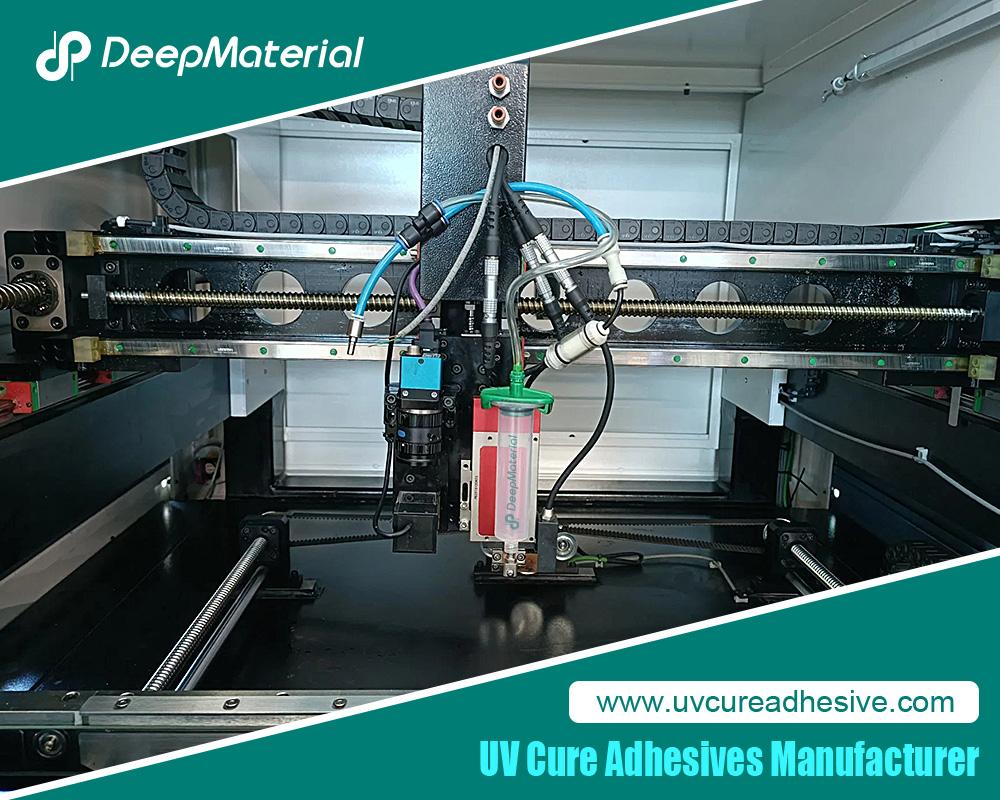
- Material Handling: Store adhesives as recommended (often refrigerated) to prevent premature gelation. Use dispensing equipment compatible with the adhesive’s viscosity and cure sensitivity.
- Post-Cure Evaluation: Always test final bonded assemblies under simulated use conditions (e.g., pressure testing, fluid immersion, sterilization cycles).
The Future: Trends and Innovations
The field is advancing rapidly. Trends include:
- Low-Migration & Extractable Formulations: Driven by increasingly sensitive drug-delivery and implantable devices.
- Bio-Degradable/Resorbable UV Adhesives: For temporary implant fixation.
- Adhesives for “Digital Health” Devices: Meeting demands for bonding miniaturized, multi-material wearable sensors.
- Enhanced Toughness: Formulations that marry the flexibility of silicones with the strength of acrylates.
Conclusion
UV-curable adhesives are indispensable in modern medical device manufacturing, offering a blend of speed, performance, and biocompatibility unmatched by many traditional joining methods. The suitable choice is not a single product but a carefully selected solution from the acrylate, epoxy, or silicone families, matched precisely to the device’s materials, design, sterilization pathway, and end-use environment.
For disposable fluidic devices, a fast-curing, clear urethane acrylate may be ideal. For a hermetically sealed implantable sensor housing, a cationic epoxy with shadow-cure capability could be the answer. For a flexible wearable component, a UV-curable silicone might be the only option. Ultimately, successful adoption requires close collaboration between device designers, process engineers, and knowledgeable adhesive chemists. By navigating the critical selection criteria—prioritizing biocompatibility, sterilization resistance, and mechanical performance—manufacturers can leverage UV-curing technology to build the next generation of safe, reliable, and life-saving medical devices.
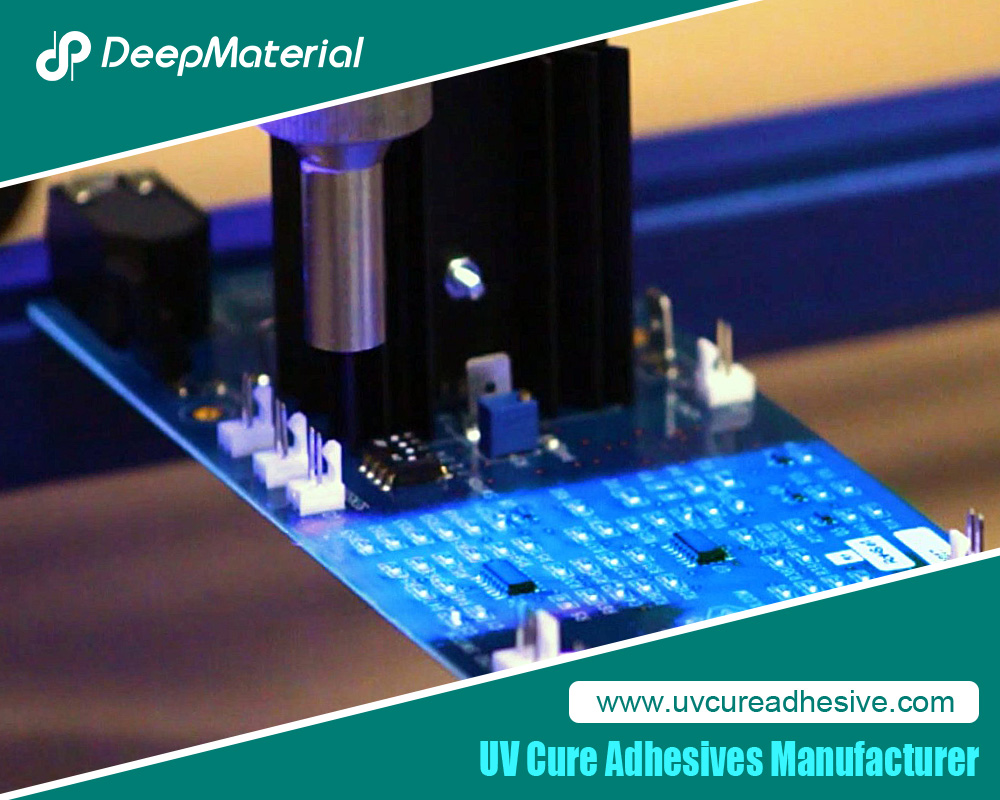
For more about which UV-curable adhesives are suitable for medical device applications, you can pay a visit to DeepMaterial at https://www.uvcureadhesive.com/ for more info.