Flexible & Durable UV Optical Adhesive for Glass Bonding Applications
In the landscape of modern manufacturing, from the sleek touchscreens of consumer electronics to the complex lens assemblies in medical devices and the expansive displays in the automotive industry, glass has emerged as a material of choice. Its optical clarity, scratch resistance, and premium feel make it indispensable. However, the very properties that make glass desirable—its rigidity and transparency—also present significant challenges when bonding it to other substrates, whether glass, metal, or polymers.
For decades, traditional adhesives like epoxies and silicones have been used, but each comes with compromises. Epoxies offer high strength but are often brittle and require long, heat-intensive curing cycles. Silicones provide flexibility but can suffer from low adhesion strength and can outgas, contaminating sensitive optical surfaces. Enter a new class of materials engineered to meet the demands of the 21st century: Flexible and Durable UV Optical Adhesives. These advanced formulations combine the best attributes of multiple adhesive families, offering rapid, low-temperature curing, exceptional optical clarity, and the mechanical resilience required to withstand thermal stress, impact, and vibration.
This article explores the composition, critical properties, application methodologies, and diverse uses of flexible and durable UV optical adhesives for glass bonding, illustrating why they are becoming the gold standard in high-performance assembly.
1. The Chemistry of Performance
To understand the capabilities of these adhesives, one must first look at their chemistry. UV optical adhesives are typically based on specialized oligomers and monomers that polymerize (cure) when exposed to light of a specific wavelength, usually in the UVA spectrum (320-400 nm).
The Shift to Flexibility
Traditional UV adhesives, often based on hard, highly cross-linked acrylic polymers, are strong but can be brittle. This rigidity leads to failure when bonded assemblies are subjected to shock, dropping, or wide temperature fluctuations—a phenomenon known as “bond line stress.” Flexible UV adhesives address this by incorporating soft segments into the polymer backbone.
-
Urethane Acrylate Oligomers: These are the workhorses of flexible UV adhesives. By varying the molecular weight and structure of the polyol segment in the urethane chain, chemists can precisely control the final product’s flexibility, ranging from slightly pliable to highly elastomeric. This allows the adhesive to act as a shock absorber.
-
Low Tg (Glass Transition Temperature) Formulations: The glass transition temperature is the point at which a polymer goes from a hard, glassy state to a softer, rubbery state. By formulating adhesives with a Tg significantly below the operating temperature range (often below -20°C), the adhesive remains in a compliant state during normal use, effectively relieving stress caused by the differential expansion and contraction of glass and other materials.
Ensuring Durability and Adhesion
Flexibility is useless without robust adhesion and long-term environmental resistance. Durability is engineered through several mechanisms:
-
Silane Adhesion Promoters: These specialized molecules act as a bridge. One end of the molecule bonds chemically with the inorganic glass surface (forming siloxane bonds, Si-O-Si), while the other end copolymerizes with the organic adhesive matrix. This creates a chemical bond far stronger and more hydrolytically stable than simple mechanical interlocking or secondary forces like van der Waals.
-
High Cross-Link Density in Key Regions: While the bulk material is flexible, a high degree of cross-linking within the polymer network ensures that the adhesive has high cohesive strength, resisting tearing and internal failure under load.
-
UV and Thermal Stabilizers: To ensure the adhesive does not yellow or degrade over years of exposure to sunlight (or indoor lighting) and temperature cycles, formulators add stabilizers that scavenge free radicals and prevent photo-oxidation.
2. Critical Material Properties for Glass Bonding
When specifying an adhesive for glass bonding, engineers must evaluate a suite of properties that directly impact the performance and longevity of the final product.
Optical Clarity
The primary function of an optical adhesive is to be virtually invisible. Key metrics include:
-
Light Transmission: High-quality formulations exceed 99% light transmission in the visible spectrum (400-700 nm) when used with anti-reflective coated glass.
-
Refractive Index (RI): To minimize reflection at the adhesive-glass interface, the adhesive’s RI should be closely matched to that of the glass (typically 1.51-1.52 for soda-lime glass). A mismatch can cause a hazy or distorted image.
-
Yellowness Index (YI): A measure of discoloration. A low initial YI and excellent resistance to change over time (due to UV or heat aging) are critical for display and lighting applications.
Flexibility and Modulus
This is the defining characteristic of the adhesives in focus.
-
Elongation at Break: This measures how much the adhesive can stretch before breaking. Flexible adhesives can have elongations of 50% to over 300%, compared to less than 10% for brittle epoxies. This allows the bond to flex upon impact.
-
Tensile/Shear Modulus: A low modulus is key to stress absorption. It indicates that the material can deform easily under stress. By deforming, the adhesive dissipates energy that would otherwise be transferred to the brittle glass or the bonded interface, preventing cracking or delamination.
Durability and Environmental Resistance
Glass bonding applications must survive real-world conditions.
-
Hydrolytic Stability: Glass surfaces are hydrophilic (water-loving). Moisture can attack the bond line, leading to delamination. Silane adhesion promoters are vital for creating water-resistant chemical bonds.
-
Temperature Cycling Resistance: Assemblies must withstand rapid and extreme temperature changes (e.g., -40°C to +85°C in automotive applications). The flexible adhesive accommodates the differential thermal expansion of the various materials (the Coefficient of Thermal Expansion or CTE mismatch) without generating destructive stress.
-
Humidity and Temperature Bias (Double-85 Test): A standard reliability test is exposing the bonded assembly to 85°C and 85% relative humidity for hundreds or thousands of hours. Durable adhesives maintain their bond strength and optical clarity throughout this ordeal.
3. The Application Process
The success of a UV adhesive bond is not just about chemistry; it is also about process control. UV curing offers speed and efficiency but requires careful management.
-
Surface Preparation: This is the most critical step. Surfaces must be scrupulously clean. Contaminants like oils, dust, or fingerprints act as release agents. Cleaning often involves a multi-step process using isopropyl alcohol or specialized glass cleaners. For maximum durability, a plasma treatment can be used to activate the glass surface, creating reactive hydroxyl groups that dramatically improve the silane adhesion promoter’s effectiveness.
-
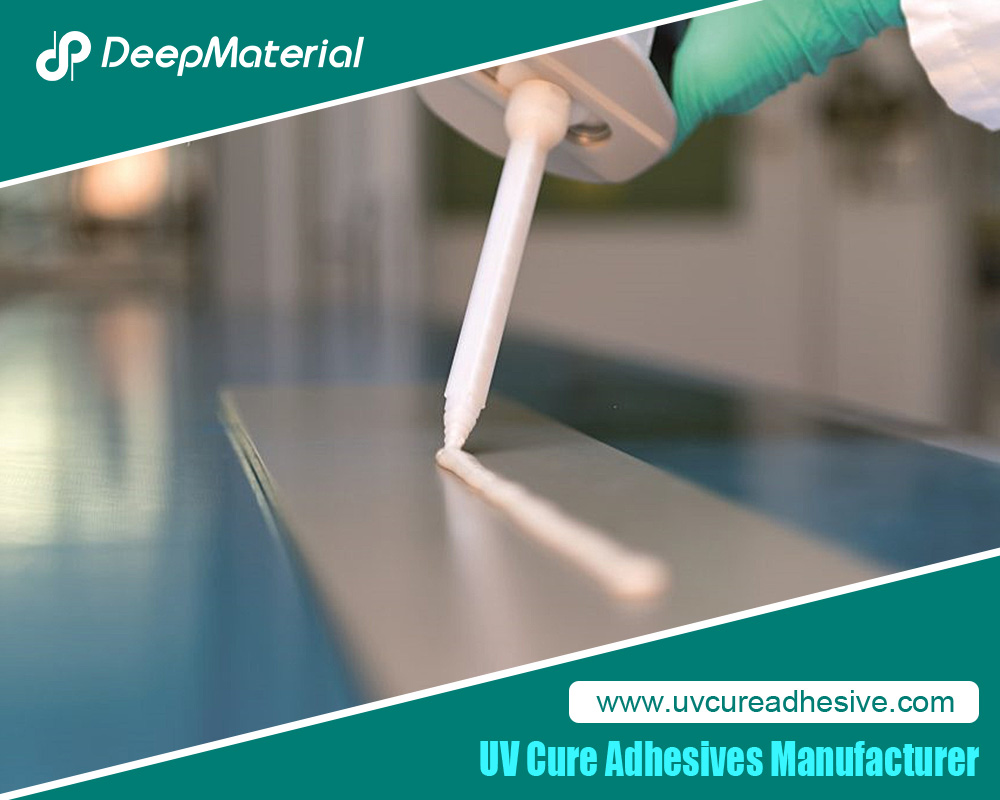
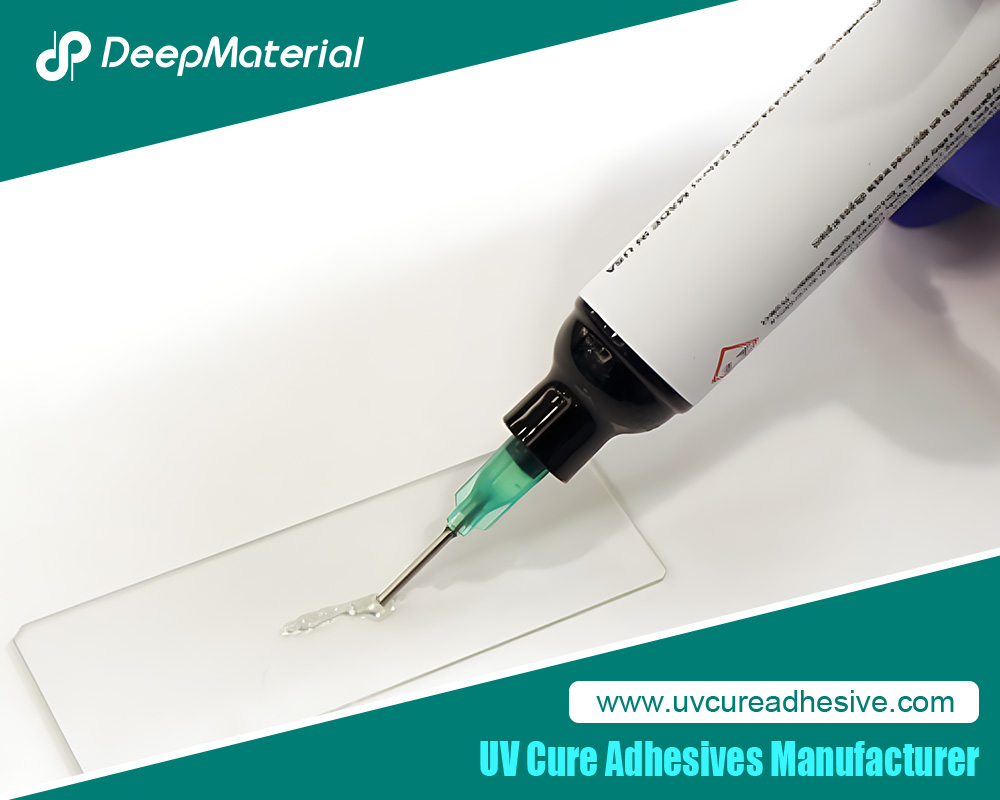
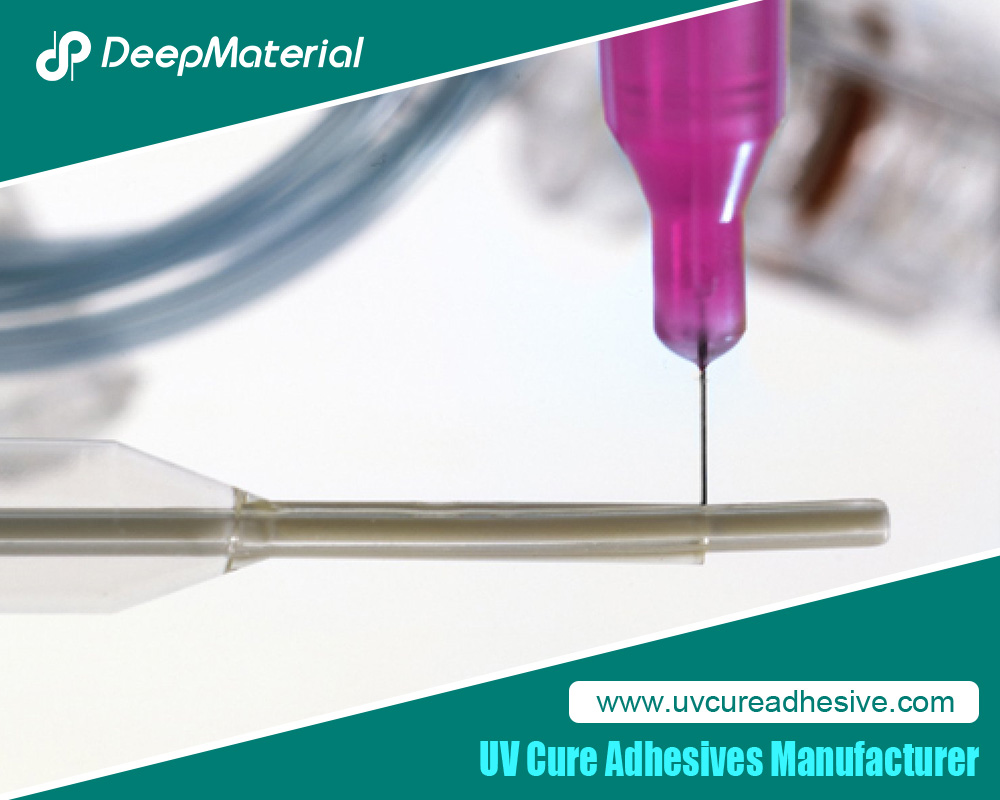
Dispensing: UV adhesives are dispensed in a variety of ways, from simple needle dispensing for small dots to precision slit-valve dispensing for creating a narrow, uniform bead around the perimeter of a display. The low viscosity of many formulations allows for thin, uniform bond lines.
-
Assembly and Positioning: The two glass components are brought together, often using precision fixtures to ensure perfect alignment. The low initial viscosity allows trapped air bubbles to escape, but careful assembly techniques are required to prevent bubble entrapment.
-
UV Curing: The assembly is exposed to UV light. The intensity and dose must be sufficient to penetrate through the glass and cure the entire depth of the adhesive. Mercury arc lamps are traditional, but LED UV curing systems are gaining dominance. LED systems offer a narrow-band output (e.g., 365 nm or 405 nm), are more energy-efficient, generate less heat, and have instant on/off capability. The adhesive formulation must be matched to the lamp’s emission spectrum.
-
Post-Curing (If Necessary): Some formulations may undergo a secondary, dark-cure mechanism to ensure complete polymerization in shadowed areas, or simply to optimize their final properties over the next 24 hours.
4. Key Applications Across Industries
The unique property set of flexible and durable UV adhesives makes them the enabling technology for numerous cutting-edge products.
Consumer Electronics
-
Touch Panel Lamination (Full Lamination): Bonding the cover glass (the outer touch surface) to the sensor glass or the LCD/OLED module itself. The optically clear adhesive eliminates the air gap, improving contrast, brightness, and sunlight readability. Flexibility is crucial to absorb impact when a phone is dropped, preventing the LCD from cracking.
-
Edge Bonding for Structural Integrity: In tablets and laptops, the glass cover is often bonded to the mid-frame or chassis using a flexible UV adhesive. This creates a strong, shock-resistant mechanical bond while sealing the device against dust and moisture ingress.
Automotive
-
Display Bonding for Center Stacks and Instrument Clusters: Modern cars feature large, curved displays that must withstand extreme temperature swings, direct sunlight, and constant vibration. The flexible UV adhesive laminates the cover glass to the display, prevents optical distortion from the curved surface, and survives the harsh automotive environment for 10+ years.
-
Head-Up Displays (HUDs): Bonding the complex prismatic combiner glass or the windshield components requires adhesives with exceptional clarity and RI matching to prevent double images.
-
Interior Ambient Lighting: Bonding light guides or covers for decorative trim strips.
Medical Devices
-
Diagnostic Equipment: Bonding lenses, filters, and windows in blood analyzers, centrifuges, and other diagnostic tools where optical precision and chemical resistance to cleaning agents are paramount.
-
Surgical Instrumentation: Bonding glass components in endoscopes and other visualization tools, requiring materials that can withstand sterilization methods like autoclaving, ethylene oxide (EtO), or gamma radiation.
Optics and Photonics
-
Lens Assembly: Bonding compound lens elements together to form a single, achromatic assembly.
-
Prism Assembly: Creating larger optical components by bonding smaller prisms with an adhesive whose RI perfectly matches the glass, making the bond line virtually disappear.
5. Advantages Over Alternative Technologies
Why choose a flexible UV adhesive over other bonding methods?
| Feature | Flexible UV Adhesive | Traditional Epoxy | Mechanical Fastening | Optical Tape |
|---|---|---|---|---|
| Cure Speed | Seconds | Minutes to Hours | N/A | Instant |
| Heat Sensitivity | Low (Room Temp Cure) | High (Often requires heat) | N/A | Low |
| Optical Clarity | Excellent | Good | Poor (Opaque) | Good |
| Stress Relief | Excellent (Low Modulus) | Poor (High Modulus) | Point Contacts (High Stress) | Good |
| Thin Bond Lines | Yes | Yes | No | Limited |
| Automation | Highly Suitable | Moderate | Moderate | Moderate |
6. Future Trends
The evolution of UV optical adhesives continues to accelerate.
-
Dual-Cure Systems: Formulations that cure with UV light but also have a secondary (moisture or heat) cure mechanism. This ensures full curing in “shadowed” areas where the UV light cannot reach, such as adhesive squeezed out from behind an opaque component.
-
Lower Temperature Curing for Heat-Sensitive Components: While UV curing is already low-temperature, formulations are being optimized to cure effectively under low-intensity LED light to prevent even minimal heat buildup in temperature-sensitive flexible OLEDs.
-
Bio-Based Content: Driven by sustainability goals, manufacturers are beginning to explore oligomers derived from renewable sources to reduce the environmental footprint of the adhesive without compromising performance.
-
Higher Refractive Index Materials: For advanced augmented reality (AR) and virtual reality (VR) optics, adhesives with very high refractive indices are needed to manage light in complex waveguide architectures.
Conclusion
Flexible and durable UV optical adhesives represent a pinnacle of materials science, ingeniously balancing the opposing forces of strength and compliance. By enabling the rapid, low-stress, and optically perfect bonding of glass, they have removed a critical bottleneck in the design and manufacture of modern technology. From the smartphone in your pocket to the display in your car and the life-saving device in a hospital, these advanced materials work silently and invisibly, ensuring that the glass interfaces we rely on are stronger, clearer, and more durable than ever before. As devices become more complex, curved, and integrated, the role of these specialized adhesives will only grow in importance.
For more about flexible & durable UV optical adhesive for glass bonding applications, you can pay a visit to DeepMaterial at https://www.uvcureadhesive.com/ for more info.