Analysis of the Current Situation of the UV Light-Curing Pressure-Sensitive Adhesive Industry in 2025: The Electronics Industry is Becoming More and More Widely Used
The pressure-sensitive adhesive (PSA) industry is undergoing a paradigm shift, driven by the relentless demands of modern manufacturing, particularly in the electronics sector. Among the various curing technologies, Ultraviolet (UV) light-curing pressure-sensitive adhesives have emerged as a dominant and transformative force. As of 2025, this technology has matured from a niche solution to a mainstream enabler, fundamentally altering assembly processes in electronics. This article provides a comprehensive analysis of the current state of the UV-curable PSA industry, with a dedicated focus on its accelerating integration and widening applications within the electronics manufacturing ecosystem. It examines the technological drivers, market dynamics, key application areas, persistent challenges, and future trajectories that define this vibrant segment of the advanced materials market.
- Introduction: The Convergence of Necessity and Innovation
The electronics industry’s unyielding trends—miniaturization, increased functionality, lightweight design, and enhanced reliability—have placed unprecedented demands on assembly materials. Traditional solvent-based, heat-cured, or room-temperature-cured PSAs often fall short, presenting issues such as thermal stress on delicate components, volatile organic compound (VOC) emissions, slow processing speeds, and limitations in bond strength or environmental resistance.
UV light-curing PSAs, formulated from oligomers, monomers, photoinitiators, and additives, offer a compelling solution. Their core value proposition lies in the “cure-on-demand” mechanism: they remain inert and handleable until exposed to specific wavelengths of UV light, triggering an instantaneous polymerization reaction that transforms the liquid or gel-like adhesive into a solid, high-performance bond. This unique characteristic aligns perfectly with the precision, speed, and gentleness required in modern electronics production. By 2025, the synergy between material science innovations in UV-PSAs and the evolving needs of electronics has created a robust and rapidly expanding market.
- Technological Drivers and Market Dynamics in 2025
2.1. Advanced Formulation Chemistry
The current landscape is defined by sophisticated formulations tailored for electronics:
- Low-Temperature & Heat-Sensitive Bonding:Formulations that cure efficiently with minimal heat generation (low exotherm) are critical for bonding temperature-sensitive components like flexible OLEDs, thin-film sensors, and advanced micro-electromechanical systems (MEMS).
- Enhanced Performance Properties:Modern UV-PSAs offer a tunable balance of properties: high initial tack for precise placement, ultimate adhesion to diverse substrates (glass, metals, plastics, and films), excellent cohesion (internal strength), and resistance to humidity, chemicals, and thermal cycling.
- Curing Depth and Shadow Area Solutions:Innovations in photoinitiator systems and the adoption of dual-cure mechanisms (e.g., UV+moisture or UV+thermal) have mitigated the classic limitation of shadow areas—spots shielded from UV light. This allows for reliable bonding in complex, three-dimensional assemblies.
2.2. Market Growth and Key Players
The global UV adhesive market, with PSAs as a significant segment, is experiencing strong growth, consistently cited in industry reports with a CAGR exceeding 8-10% leading into 2025. This is directly fueled by electronics, the largest end-use sector. The competitive landscape features established chemical giants (Henkel, Dymax, DELO, 3M, Nitto) alongside agile specialty formulators. Competition centers on developing proprietary chemistries for next-generation applications, particularly in electric vehicles (EVs) and wearable electronics.
- Pervasive Applications in the Electronics Industry
The application breadth of UV-PSAs in electronics has expanded dramatically, moving beyond simple lamination to become integral to core manufacturing processes.
3.1. Display and Touch Module Assembly
This remains a cornerstone application. UV-PSAs are used for:
- Optically Clear Lamination:Bonding cover lenses to touch sensors and display panels (LCD, OLED) in smartphones, tablets, laptops, and automotive displays. They provide crystal-clear optics, strong bonding, and protection against moisture and delamination.
- Edge Sealing and Gasketing:Sealing the edges of displays to prevent dust and moisture ingress, a critical reliability factor.
3.2. Semiconductor and Component Bonding & Protection
- Die Attachment and Chip Bonding:High-purity, high-thermal-conductivity UV-PSAs are used for temporarily or permanently bonding semiconductor dies, particularly in low-stress applications or for very small, heat-sensitive chips.
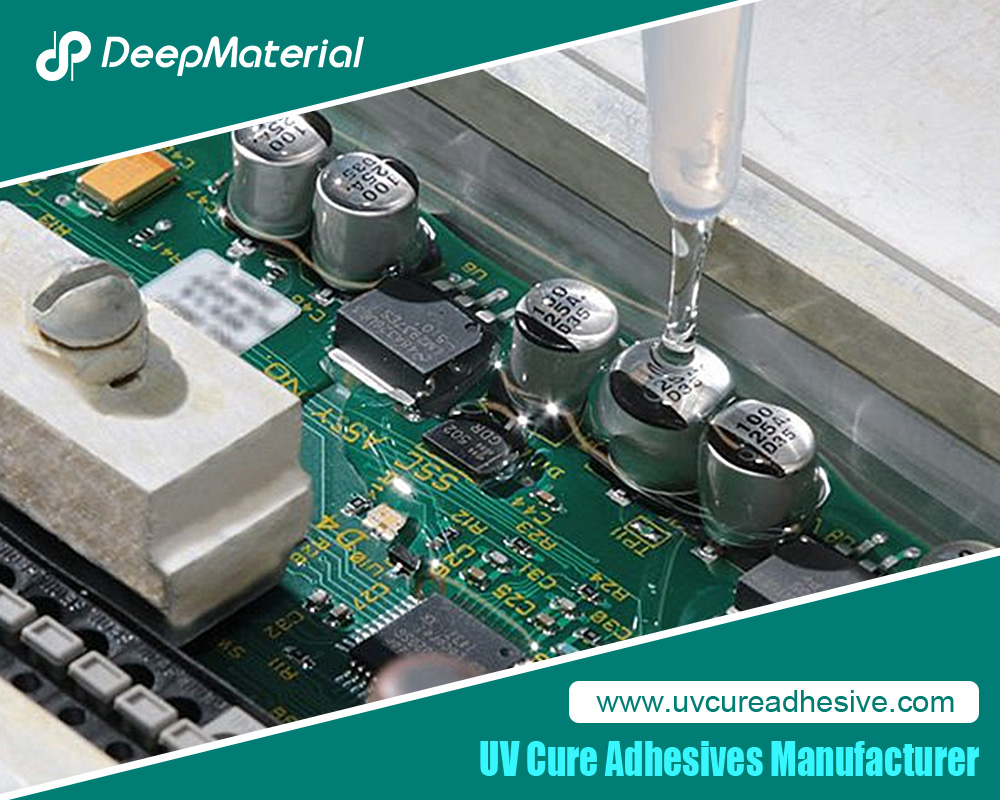
- Conformal Coating and Potting:UV-curable coatings protect printed circuit board assemblies (PCBAs) from moisture, dust, and corrosion. Their rapid cure enables selective masking and high-throughput in-line processing.
- Temporary Wafer Bonding and Dicing:UV-PSAs facilitate the handling of ultra-thin wafers during grinding and dicing processes. After processing, UV exposure allows for easy debonding.
3.3. Flexible and Wearable Electronics
The rise of flexible hybrid electronics (FHE) is a major growth vector. UV-PSAs are ideal for:
- Bonding Flexible Substrates:Attaching components to polyimide (PI), polyethylene terephthalate (PET), or thermoplastic polyurethane (TPU) films without causing stress or deformation.
- Wearable Device Assembly:Used in smartwatches, fitness trackers, and medical patches for bonding sensors, batteries, and flexible circuits to curved surfaces and elastic materials, ensuring durability under flexing and sweat exposure.
3.4. Electric Vehicle (EV) Electronics
The automotive electronics revolution, especially in EVs, is a powerful new driver:
- Battery Pack Assembly:Bonding and sealing battery cell modules, managing thermal interface materials (TIMs), and providing structural integrity with lightweight materials.
- Power Electronics and Sensors:Encapsulating and bonding inverters, DC-DC converters, and advanced driver-assistance system (ADAS) sensors like LiDAR and cameras, where vibration resistance and long-term reliability are paramount.
3.5. Process Efficiency and Automation
Beyond material performance, UV-PSAs are valued for manufacturing efficiency. Their instantaneous cure enables:
- High-Speed In-Line Production:Dramatically reduced cycle times compared to thermal or air-drying adhesives.
- Reduced Footprint:Eliminating large drying ovens or curing tunnels saves valuable factory floor space.
- Improved Process Control and Yield:Immediate fixation prevents component drift, allowing for precise alignment and immediate downstream processing, boosting overall yield.
- Challenges and Considerations in 2025
Despite the progress, the industry faces several ongoing challenges:
- Substrate Compatibility:The proliferation of new engineered plastics and composite materials in electronics requires constant formulation adaptation to ensure optimal adhesion.
- Light Accessibility and Fixturing:Designing assemblies and production lines to ensure complete UV exposure remains an engineering consideration, though dual-cure systems have alleviated this significantly.
- Cost and Supply Chain:High-performance raw materials (specialty oligomers, photoinitiators) can be more expensive than traditional adhesive components. Supply chain resilience for these specialized chemicals is a focus area.
- Sustainability and Regulation:While UV-PSAs are typically 100% solids (VOC-free), there is growing pressure regarding the recyclability of bonded assemblies and the environmental profile of raw materials. Regulations like REACH continue to influence formulation choices.
- Future Outlook and Conclusion
As we move through 2025 and beyond, the trajectory for UV light-curing pressure-sensitive adhesives in electronics points toward further integration and innovation. Key future trends include:
- Formulations for Next-Gen Devices:Adhesives for foldable displays, stretchable electronics, and bio-integrated devices will require unprecedented flexibility, durability, and biocompatibility.
- Intelligence and Functionality:Development of PSAs with added functionalities, such as enhanced thermal conductivity for heat dissipation, electrically conductive properties for grounding, or even stimuli-responsive (reworkable) adhesives.
- Advanced Curing Technologies:Broader adoption of Light Emitting Diode (LED) UV curing systems, which offer longer lifetimes, cooler operation, and precise wavelength control compared to traditional mercury-arc lamps, aligning with the industry’s energy efficiency goals.
- Synergy with Industry 4.0:Integration of UV curing processes into fully digitalized smart factories, with real-time process monitoring and adaptive curing parameters for maximum quality control.
Conclusion
The UV light-curing pressure-sensitive adhesive industry in 2025 is characterized by a deep and widening symbiosis with the electronics sector. It has successfully transitioned from being a convenient alternative to becoming an indispensable, performance-critical material that enables the very design and manufacturing possibilities of modern electronics. By offering a unique combination of rapid processing, superior performance, and design flexibility, UV-PSAs are not just keeping pace with the electronics revolution—they are actively propelling it forward. The ongoing dialogue between adhesive chemists and electronics engineers promises a future where material limitations are continually overcome, paving the way for the next generation of innovative electronic devices.
For more about analysis of the current situation of the UV light-curing pressure-sensitive adhesive industry in 2025: the electronics industry is becoming more and more widely used, you can pay a visit to DeepMaterial at https://www.uvcureadhesive.com/ for more info.