Full Analysis of Technological Innovation and Application Scenarios of UV Pressure-Sensitive Adhesive
In the intricate world of modern manufacturing and product design, the humble adhesive plays a role of paramount importance. Among the diverse adhesive technologies, Ultraviolet (UV) Pressure-Sensitive Adhesives (PSAs) have emerged as a transformative force, bridging the gap between high-performance bonding and efficient, sustainable production. These advanced materials, which remain permanently tacky at room temperature and form a bond upon the application of light pressure, are uniquely cured and their properties fine-tuned using ultraviolet light. This article provides a comprehensive analysis of the technological innovations driving UV PSA development and explores their expanding array of application scenarios across critical industries.
Part 1: Deconstructing the Technology – The Innovation Engine of UV PSAs
Traditional PSAs, such as those based on acrylics, silicones, or rubbers, achieve their properties through solvent evaporation, heat curing, or simple drying. UV PSAs, however, represent a paradigm shift, leveraging the precision of photopolymerization. Their core innovation lies in a formulation that incorporates photoinitiators—molecules that fragment into reactive free radicals or cations upon exposure to specific wavelengths of UV light. These activated species then trigger a rapid chain reaction, converting liquid or semi-solid oligomers and monomers into a solid, cross-linked polymer network in a matter of seconds.
The technological advancements in UV PSAs can be analyzed across three key dimensions: chemical formulation, processing technology, and property engineering.
- Chemical Formulation Innovations:
- Oligomer and Monomer Tailoring: At the heart of UV PSA performance is the chemistry of the base oligomers (short polymer chains). Advances in urethane acrylates, epoxy acrylates, and specialized acrylic oligomers allow chemists to precisely engineer backbone flexibility, tack, and ultimate adhesion strength. The choice and ratio of reactive diluent monomers further fine-tune viscosity, crosslink density, and final modulus (softness or hardness).
- Photoinitiator Systems: Modern UV PSAs employ sophisticated photoinitiator packages. The shift towards long-wavelength UVA (320-390 nm) and UV-Visible (395-455 nm) initiators is a major innovation. These systems offer deeper cure in shadowed areas, enable the bonding of UV-absorbing substrates (like certain plastics), and reduce the risk of substrate degradation. Hybrid cationic-radical systems are also emerging, offering reduced oxygen inhibition and improved adhesion to challenging surfaces.
- Functionality and Sustainability Additives: Innovation extends to additives that provide enhanced functionality. This includes thermally conductive or electrically insulating fillers for electronics, and the development of bio-based acrylates derived from renewable resources, reducing the carbon footprint. Furthermore, the creation of debondable-on-demand UV PSAs—adhesives that lose their bond strength when exposed to a specific secondary UV wavelength or heat—supports recycling and repair, a crucial innovation for a circular economy.
- Processing and Curing Technology:
- Instant Cure & On-Demand Tack: The most significant processing advantage is instantaneous cure. Unlike thermal or drying processes that require ovens and time, UV curing happens in-line at high speed, revolutionizing production efficiency. Manufacturers can also employ a two-stage process: a partial “pin” cure to create a handleable, non-tacky film, followed by a final full cure after lamination. This “controlled tack” technology is vital for complex assemblies.
- LED UV Curing Systems: The transition from traditional mercury-vapor arc lamps to Light Emitting Diode (LED) UV systems is a landmark innovation. LED UV lamps emit a narrow, intense spectrum matched to the photoinitiator’s absorption peak. They offer immense benefits: up to 70% energy savings, minimal heat generation (preventing damage to heat-sensitive films), instant on/off capability, longer lifetime (20,000+ hours), and no ozone production. This makes them safer and more compatible with sensitive electronic and medical component assembly.
- Property Engineering and Performance:
- Low-Modulus, High-Tack Formulations: A key breakthrough has been the development of UV PSAs that rival the soft, conformable, and high-tack nature of their solvent-based predecessors. These low-modulus adhesives can wet out rough or micro-textured surfaces beautifully, ensuring strong bonds to uneven substrates like certain textiles or low-surface-energy plastics.
- Adhesion to Low-Surface-Energy (LSE) Plastics: Bonding to polypropylene (PP), polyethylene (PE), and thermoplastic polyolefins (TPO) has historically been difficult. Innovative UV PSA formulations now incorporate specialized monomers and adhesion promoters that effectively wet and bond to these challenging LSE materials, unlocking new design possibilities in automotive and consumer goods.
- Enhanced Environmental Resistance: Through advanced cross-linking chemistry, modern UV PSAs exhibit exceptional resistance to temperature extremes (from -40°C to 150°C+), humidity, plasticizer migration, and chemical exposure. This makes them suitable for harsh outdoor and under-the-hood applications where traditional PSAs would fail.
Part 2: The Application Landscape – Where UV pressure-sensitive adhesives Are Transforming Industries
The unique property set of UV PSAs—instant curing, design flexibility, high performance, and environmental friendliness (typically 100% solids, VOC-free)—has catalyzed their adoption across a spectrum of high-tech and demanding industries.
- Electronics and Displays (The Flagship Application):
This is where UV PSAs have become indispensable.
- Display Lamination: They are used to laminate protective cover lenses to touch sensors and display modules in smartphones, tablets, and automotive dashboards. Their optical clarity (>99%), ability to resist yellowing under UV light, and strong bonding to glass and polycarbonate are critical.
- EMI/RFI Shielding: Conductive UV PSAs are used to bond metalized foils or fabrics to housings, providing both mechanical attachment and grounding for electromagnetic interference shielding.
- Component Bonding and Temporary Fixation: UV PSAs secure delicate components like flex circuits, lenses, and micro-motors during assembly. Debondable versions allow for rework and repair.
- Automotive Manufacturing:
The automotive industry leverages UV PSAs for both interior and exterior applications, driven by the need for lightweighting, durability, and aesthetic integration.
- Interior Trim Bonding: They are used to bond decorative films, wood/brushed metal veneers, and control panel overlays onto PP, ABS, and other substrates, replacing mechanical clips and volatile solvent-based adhesives.
- Exterior Badging and Emblems: UV-cured PSAs provide a clean, durable, and rust-free alternative to mechanical fasteners for badges, trim, and nameplates, withstanding car washes, stone chips, and weather.
- Light Guide Bonding: In advanced lighting systems, optically clear UV PSAs bond LED light guides within headlamps and interior ambient lighting.
- Medical Device and Wearable Technology:
The demands for biocompatibility, skin-friendliness, and precision make UV PSAs ideal for medical applications.
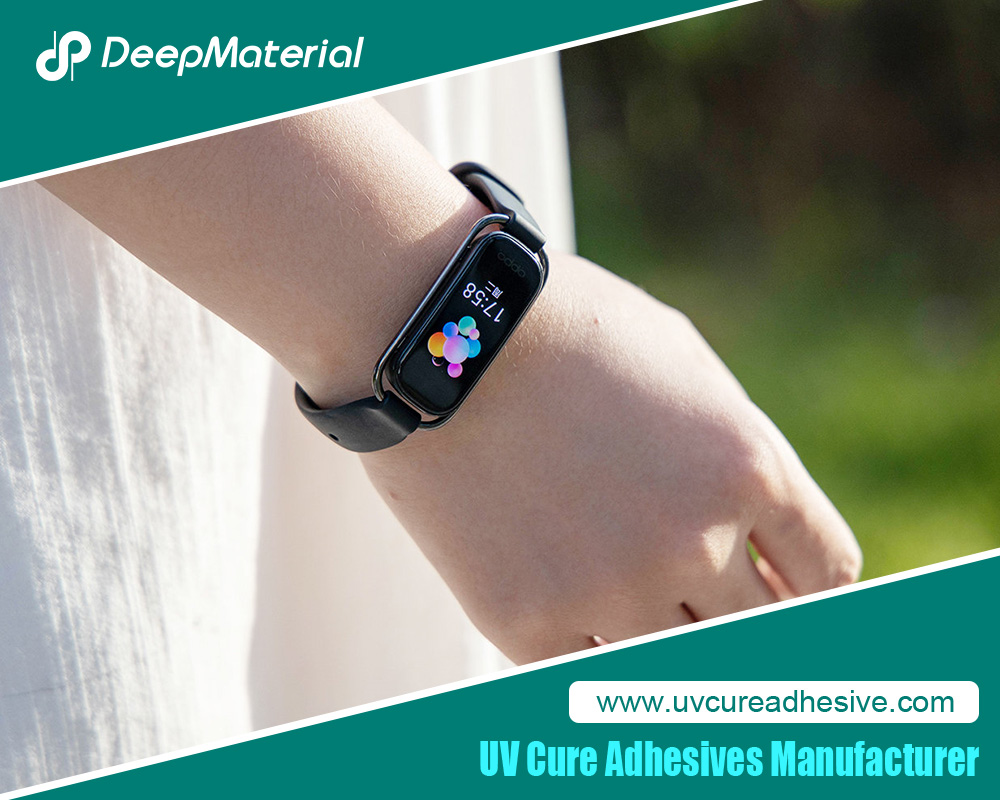
- Wearable Sensors: They are the adhesive of choice for bonding flexible sensors and electrodes to skin in continuous glucose monitors, ECG patches, and smart fitness trackers. Formulations are engineered for long-term wear, moisture resistance, and hypoallergenic properties.
- Device Assembly: UV PSAs assemble diagnostic cartridges, bond lenses in medical scopes, and secure components in hearing aids, offering clean-room compatibility and high bond strength to diverse materials.
- Graphic Arts and Industrial Labeling:
- High-Performance Labels: For asset tags, UL/CSA certification labels, and chemical drum labels that must withstand extreme environments, UV PSAs provide unmatched durability and immediate high-strength adhesion (ultimate tack).
- Overlaminate Films: Protective overlaminates for signage, vehicle wraps, and ID cards use UV PSAs for bubble-free application, clarity, and resistance to graffiti and weathering.
- Emerging and Niche Applications:
- Photovoltaic Modules: Used for bonding backsheets and junction box encapsulation, where long-term UV stability and moisture barrier properties are vital.
- Flexible Hybrid Electronics (FHE): As a cornerstone material for printing and assembling circuits on flexible substrates, UV PSAs enable the next generation of foldable and stretchable electronics.
Conclusion: A Future Bonded with Light
UV Pressure-Sensitive Adhesives stand at the intersection of material science, chemistry, and manufacturing engineering. The continuous stream of innovations in photoinitiator chemistry, oligomer design, and LED curing technology is systematically removing the historical limitations of adhesive performance and processing efficiency. From enabling the sleek, robust design of our smartphones to ensuring the reliable function of life-saving medical wearables and the durable aesthetics of modern vehicles, UV PSAs have become a silent but critical enabler of technological progress.
Looking ahead, the trajectory points towards even smarter, more sustainable, and higher-performing materials. The integration of functionalities like intrinsic stress sensing, enhanced thermal conductivity for 5G devices, and ever-greater proportions of bio-based content will continue to expand the application frontier. As manufacturers across all sectors pursue goals of efficiency, miniaturization, durability, and environmental responsibility, UV PSA technology will undoubtedly remain a key protagonist in the story of advanced manufacturing, proving that some of the strongest bonds are indeed forged with light.
For more about full analysis of technological innovation and application scenarios of UV pressure-sensitive adhesive, you can pay a visit to DeepMaterial at https://www.uvcureadhesive.com/ for more info.