High Transmittance (>99%) UV Optical Clear Adhesive for Display Lamination
The Imperative for Optical Purity
Modern display technology—from OLED smartphones to mini-LED TVs and automotive dashboards—is fundamentally about controlling light. Every interface between materials presents an opportunity for light loss through reflection, scattering, or absorption. In a complex display module, comprising a cover glass, touch sensor, polarizers, and the actual display panel (OLED or LCD), these losses compound, diminishing brightness, contrast, and color fidelity.
Lamination, the process of bonding these layers into a monolithic stack, has evolved from using simple pressure-sensitive adhesives (PSAs) to sophisticated optically matched systems. The goal is to create a bonded interface that is mechanically robust, environmentally stable, and, above all, optically invisible. This is where high-transmittance UV optical clear adhesives come to the fore. Achieving >99% transmittance (measured per interface, per ASTM D1003) is not merely a specification; it is a necessity for enabling high-brightness, low-power displays with true-to-life color reproduction and the seamless “black panel” aesthetic demanded by the market.
Material Science: Engineering Invisibility
The formulation of a UV optical clear adhesive with >99% transmittance is a feat of polymer chemistry and nanotechnology. It requires a meticulous balance of several key components:
2.1. Oligomer and Monomer Selection: The base of the adhesive is typically urethane acrylates or epoxy acrylates, chosen for their inherent clarity, flexibility, and post-cure durability. Reactive diluents (monomers like isobornyl acrylate or phenoxyethyl acrylate) are carefully selected not only for viscosity control but for their refractive index (RI) matching capability and low yellowness index. Any aromatic or chromophoric groups that could absorb UV or visible light are rigorously excluded.
2.2. Refractive Index Matching: The core principle behind invisibility is RI matching. The adhesive’s RI (typically tuned between ~1.48 and 1.52) must closely match that of the bonded substrates (e.g., glass ~1.51, PET ~1.65, polycarbonate ~1.58). A perfect match eliminates Fresnel reflections at the interface. The formula is engineered to maintain this RI match not just initially, but throughout the product’s lifecycle, despite environmental stressors like heat and humidity.
2.3. Photoinitiator System: UV curing is initiated by photoinitiators that decompose under specific UV wavelengths (e.g., 365nm or 395nm). For optical clarity, these must be highly efficient at low concentrations and must photodegrade into byproducts that are completely non-yellowing and non-migratory. Any residual photoinitiator or its breakdown products can cause long-term yellowing, destroying the optical performance.
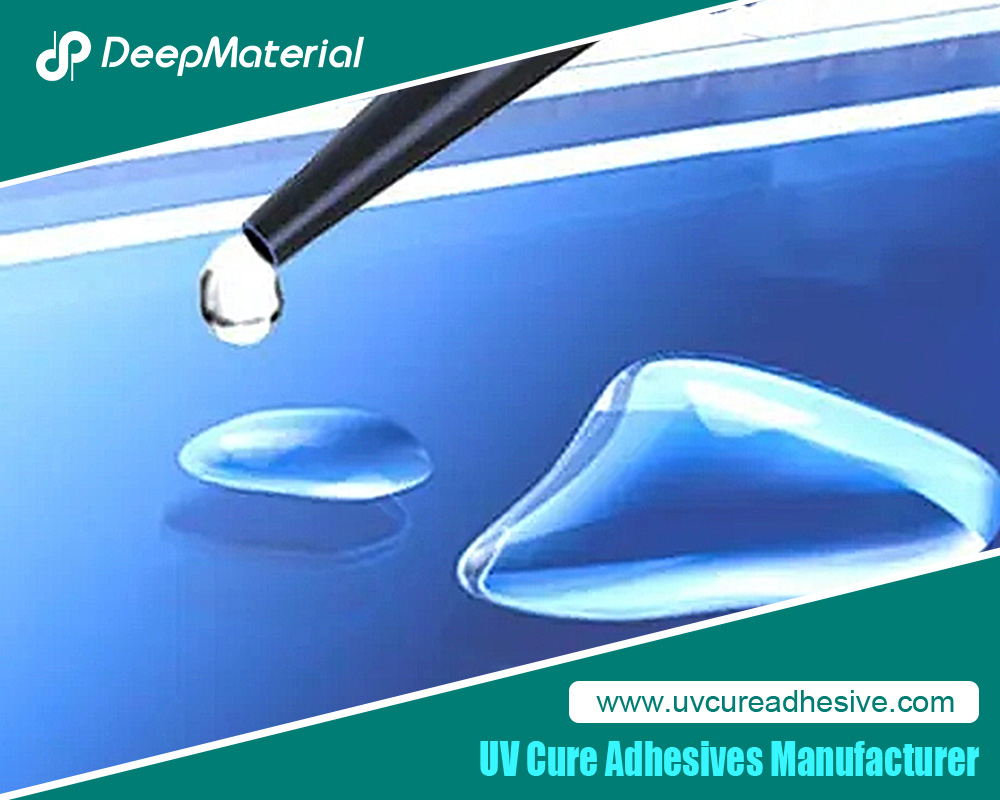
2.4. Nanoparticulate Control and Filtration: Achieving >99% transmittance requires the virtual elimination of light-scattering centers. This means raw materials must be ultra-pure, and the manufacturing process must occur in a cleanroom environment with nanofiltration (typically down to 0.1 microns) to remove any particulate contamination. Furthermore, the adhesive formulation itself must be thermodynamically stable to prevent micro-gelation or phase separation over time, which would create scattering sites.
Key Performance Characteristics Beyond Transmittance
While optical clarity is the headline feature, a viable display lamination adhesive must excel in a matrix of interdependent properties:
3.1. Durability and Environmental Resistance:
-
Thermal Stability: Must withstand prolonged exposure to high temperatures (85-105°C) and thermal cycling without bubbling, delamination, or significant change in RI. This is critical for displays used in automotive applications or left in hot cars.
-
Humidity Resistance: Must prevent moisture ingress (high moisture vapor transmission rate resistance) and not hydrolyze or haze under high humidity (85% RH, 85°C) conditions. Moisture can cause corrosion of metal traces in touch sensors.
-
Yellowing Resistance: Must exhibit minimal delta b* (yellowness index) change after prolonged UV exposure (simulating sunlight) and thermal aging. This is directly linked to the purity of the formulation.
3.2. Mechanical Properties:
-
Modulus and Elongation: The adhesive must have a low modulus (softness) to absorb stresses from substrate expansion/contraction and to enable conformability for curved or flexible displays. Simultaneously, it needs sufficient cohesion and elongation at break to resist creep and debonding.
-
Adhesion Strength: Must provide strong, durable adhesion to a variety of surfaces (glass, SiO₂/ITO coatings, PET, polyimide) without causing damage during potential rework.
3.3. Process Compatibility:
-
Cure Profile: Must cure rapidly (seconds to minutes) under defined UV dose (mJ/cm²) to enable high-throughput manufacturing. A “dark cure” mechanism, where polymerization continues after UV exposure, can be beneficial for shadowed areas.
-
Outgassing: Must exhibit extremely low levels of volatile organic compound (VOC) outgassing, as volatiles can condense on critical surfaces inside the display, causing defects.
The Lamination Process: Precision Application
Utilizing this advanced material requires an equally precise manufacturing process. The standard methodology is vacuum lamination:
-
Cleaning: Substrates are ultrasonically cleaned and plasma-treated to ensure perfect surface energy for wetting and adhesion.
-
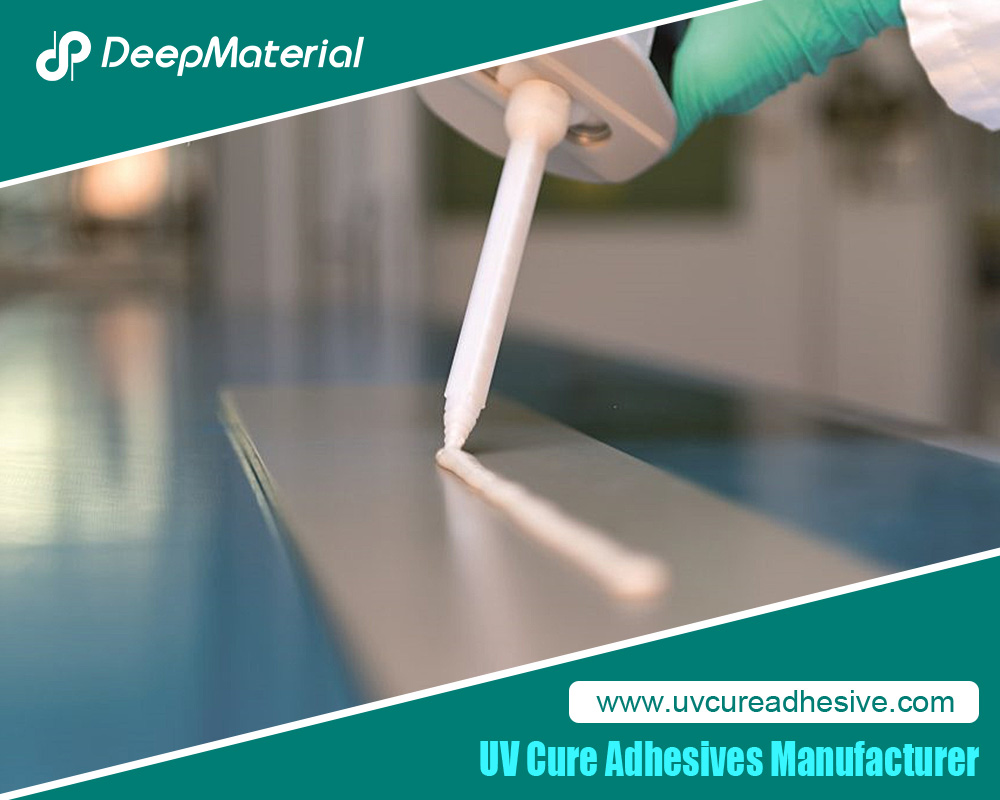
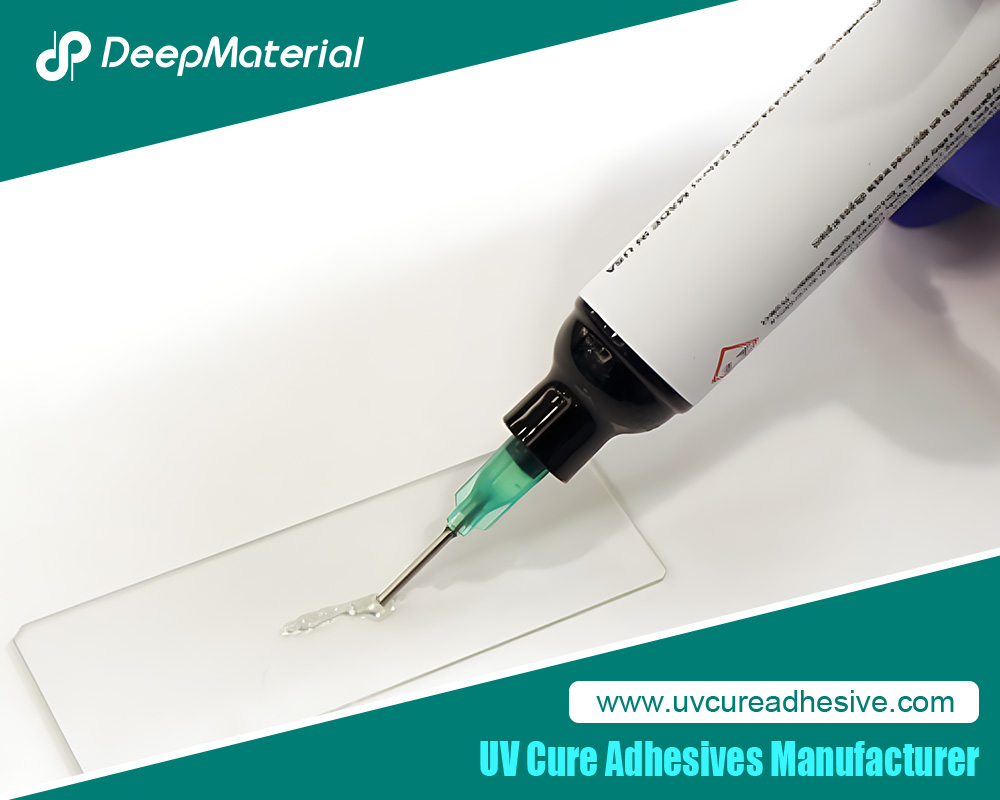
Dispensing & Film Application: The UV-OCA, often supplied as a pre-formed, liner-protected film, is meticulously aligned and applied to one substrate. For liquid dispensing, precision jetting or screen printing is used.
-
Vacuum Chamber Lamination: The stack is placed in a vacuum chamber. Evacuating the air eliminates bubbles that would otherwise be trapped. A roller or membrane then applies uniform pressure, forcing the OCA to flow and wet the second substrate perfectly.
-
UV Curing: The assembled stack is exposed to controlled UV radiation. The curing is often done in a nitrogen (N₂) inert atmosphere. Oxygen inhibition is a known issue in radical-based UV polymerization, where surface oxygen can prevent complete curing, leading to a sticky surface. A nitrogen purge eliminates this, ensuring a full, through-thickness cure and optimal surface properties.
Application Case Studies
5.1. Smartphone and Tablet Displays: Here, the >99% transmittance OCA is used to laminate the cover glass to the touch sensor and/or the polarizer to the OLED panel. This maximizes brightness efficiency, allowing for either higher perceived brightness at the same power or lower power consumption for the same brightness. It is essential for enabling high dynamic range (HDR) content by preserving deep blacks and peak highlights.
5.2. Automotive Interior Displays: These applications demand the highest durability. The UV-OCA must maintain its optical clarity and bond strength while enduring extreme temperature cycles (-40°C to 105°C), prolonged sunlight/UV exposure, and humidity. The adhesive also plays a role in safety, contributing to the shatter-resistance of the laminated glass stack.
5.3. Emerging Flexible and Foldable Displays: This is arguably the most demanding frontier. The OCA must not only have ultra-high transmittance but also exceptional flexibility, low creep, and high fatigue resistance to survive hundreds of thousands of folds. It also acts as a neutral stress layer, managing the mechanical stresses between other layers in the complex, multi-layer stack to prevent delamination or cracking during dynamic bending.
5.4. Augmented Reality (AR) Waveguides: For near-eye displays, every photon is precious. Laminating refractive or diffractive optical elements with a >99% transmittance OCA minimizes losses in the optical path, which is directly critical for achieving bright, efficient, and visually comfortable AR experiences.
Challenges and Future Directions
Despite the advanced state of the art, challenges remain:
-
Cost: Ultra-purified materials and cleanroom manufacturing make these OCAs significantly more expensive than standard alternatives.
-
Reworkability: While some formulations allow for debonding with heat or solvent, it remains a delicate process. Developing more easily reworkable, yet equally durable, systems is an active area of R&D.
-
Multi-Wave Curing: Future systems may combine UV with secondary cure mechanisms (e.g., thermal or moisture) to achieve deeper cure in shadowed areas of complex 3D shapes or under opaque components.
-
Functional Integration: Research is ongoing into OCAs with added functionalities, such as thermal conductivity for heat dissipation from displays, or adjustable RI for advanced optical designs.
Conclusion
The development of UV-curable optical clear adhesives with greater than 99% transmittance is a silent revolution in display technology. It transcends the role of a simple glue, becoming an enabling, optically functional component in the display stack. By virtually eliminating interfacial optical losses, these advanced materials allow designers and engineers to push the boundaries of brightness, efficiency, form factor, and reliability. As displays continue to evolve—becoming brighter, more flexible, and more integrated into our environment—the demand for such high-performance, “invisible” bonding solutions will only intensify, solidifying their role as a cornerstone of advanced optoelectronics manufacturing.
For more about high transmittance (>99%) UV optical clear adhesive for display lamination, you can pay a visit to DeepMaterial at https://www.uvcureadhesive.com/ for more info.